
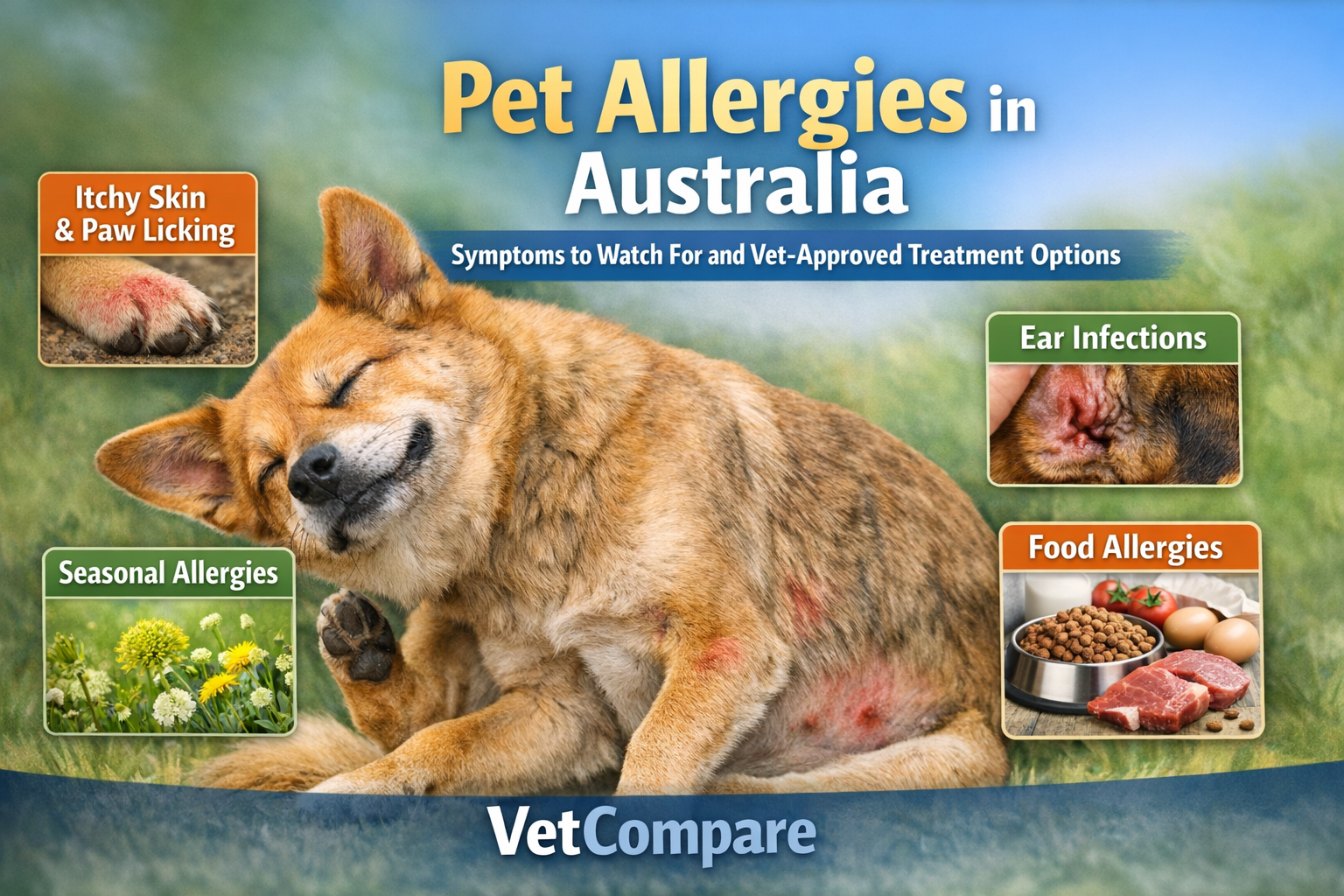
Pet Allergies in Australia: Symptoms to Watch For and Vet-Approved Treatment Options
Introduction
If your dog is constantly scratching, licking their paws, or shaking their head, they might be dealing with allergies. Pet allergies are incredibly common across Australia, but they often look quite different from human allergies. While we might sneeze and have watery eyes, dog allergies symptoms Australia typically show up as skin problems, ear infections, and relentless itching. Many pet owners search for answers when they have an itchy dog no fleas Australia can explain, wondering what's causing their pet's discomfort. The truth is, seasonal allergies dogs Australia experience can be triggered by pollens, grasses, and environmental factors that vary throughout the year. For some pets, the culprit might be their food, which is why vets often recommend a food allergy elimination diet dog owners can follow under veterinary guidance.
Understanding what's causing your pet's symptoms—and how Australian vets approach treatment—can help you get your furry friend the relief they need.
Table of Contents
- Common Signs of Pet Allergies in Australia
- Main Types of Allergies Seen by Aussie Vets
- Flea Allergy Dermatitis (FAD)
- Environmental & Seasonal Allergies in Dogs
- Food Allergies and Food Sensitivities
- My Dog Is Itchy but Has No Fleas — What Else Could It Be?
- Vet-Approved Treatment Options
- When to See a Vet Urgently
- Compare Vets for Allergy Care in Australia
- FAQs About Pet Allergies in Australia
- Conclusion
Common Signs of Pet Allergies in Australia
Pet allergies rarely cause sneezing or a runny nose like they do in humans. Instead, Australian vets commonly see allergies manifest as:
Skin problems: Red, inflamed skin, hair loss, hotspots (moist, painful patches), and recurring sores from constant scratching or chewing.
Paw licking and chewing: Many allergic dogs become obsessed with licking or chewing their paws, which can lead to staining (rusty-brown colour), soreness, and infection.
Ear infections: Head shaking, scratching at ears, smelly discharge, and redness inside the ear flap are all common signs. Ear problems often recur in allergic pets.
Face rubbing: Pets may rub their face along carpet or furniture, or scratch at their muzzle and eyes.
Belly and groin irritation: The underside of your pet—including armpits, groin, and belly—may become red, inflamed, and itchy.
These symptoms can range from mild seasonal flare-ups to year-round discomfort, depending on what's triggering the reaction.
Main Types of Allergies Seen by Aussie Vets
Australian veterinarians typically see three main categories of allergies in pets. Understanding which type (or combination) your pet has is key to managing their symptoms effectively.
Flea Allergy Dermatitis (FAD)
Flea allergy dermatitis is one of the most common causes of allergic skin disease in Australian dogs and cats. The problem isn't just fleas themselves—it's the saliva they inject when biting. Even one or two flea bites can trigger an intense reaction in sensitive pets.
Classic signs include severe itching and hair loss concentrated around the lower back, rump, tail base, and back of the thighs (the "flea triangle"). Pets may also develop sores and secondary skin infections from constant scratching.
Fleas thrive in Australia's warm climate, particularly during summer months. In many parts of the country, flea season can extend nearly year-round, making consistent prevention essential.
Environmental & Seasonal Allergies in Dogs
Environmental allergies—also called atopic dermatitis or atopy—occur when pets react to airborne allergens like grass pollens, tree pollens, dust mites, and mould spores. This type of allergy is extremely common, affecting an estimated 10–15% of dogs in Australia.
Seasonal allergies dogs Australia experience often worsen during spring (September to November) when pollen counts are highest, though some pets also struggle through summer. The timing and severity can vary depending on your location, local vegetation, and weather patterns.
Common itch zones for environmental allergies include:
Paws (between toes and pads)
Face, muzzle, and around the eyes
Ears (both inside and the ear flaps)
Belly, groin, and armpits
Under the tail
Unlike flea allergies, environmental allergies tend to cause more widespread itching rather than focusing on the back end of the pet.
Food Allergies and Food Sensitivities
Food-related allergies can cause persistent itching, recurrent ear infections, and sometimes digestive symptoms like vomiting or diarrhoea. Unlike seasonal allergies, food allergies typically cause year-round symptoms that don't improve with the changing seasons.
The challenge with food allergies is that their symptoms overlap significantly with other skin conditions. That's why vets rely on a properly conducted food allergy elimination diet dog owners must follow strictly—usually for around eight weeks. During this trial, pets eat only a veterinary-recommended diet with no extra treats, chews, table scraps, or flavoured medications.
If symptoms improve during the elimination period and return when regular food is reintroduced, a food allergy is likely the culprit.
My Dog Is Itchy but Has No Fleas — What Else Could It Be?
This is one of the most common questions Australian pet owners ask their vets. Just because you can't see fleas doesn't mean they aren't involved—flea-allergic dogs can react intensely to just a few bites, and fleas can be surprisingly difficult to spot, especially on dark-coated pets.
However, your itchy dog no fleas Australia vets can find might be dealing with:
Mites: Sarcoptic mange mites cause intense itching and are invisible to the naked eye. They're highly contagious and require veterinary diagnosis.
Secondary infections: Bacterial or yeast infections often develop on already-irritated skin, making itching much worse. These infections need treatment before the underlying allergy symptoms can properly improve.
Grass seeds and foreign bodies: Particularly common in Australian summer and autumn, grass seeds can lodge in paws, ears, and skin folds, causing irritation that looks remarkably like an allergy flare-up.
Contact irritants: Some dogs react to lawn chemicals, certain plants, or cleaning products.
A thorough veterinary examination is essential to determine what's really going on. Your vet may recommend skin scrapes, cytology (looking at cells under a microscope), or other diagnostic tests.
Vet-Approved Treatment Options
Managing pet allergies successfully usually requires a multi-pronged approach. Most Australian vets recommend strategies that reduce exposure to triggers, calm inflammation, and treat any secondary problems.
Year-round flea prevention: In many parts of Australia, vets recommend continuous flea control throughout the year, not just in summer. This is particularly important for pets with flea allergy dermatitis. Modern flea preventatives are highly effective and treating both your pet and their environment is key.
Environmental management: For pets with seasonal or environmental allergies, practical steps can help reduce allergen exposure:
Rinse or wipe your dog's paws, belly, and face after walks to remove pollen
Wash bedding regularly in hot water
Consider using a gentle, vet-recommended shampoo to soothe skin (your vet can advise on bathing frequency)
Keep grass short and reduce time outside during high pollen days
Elimination diet trials: If food allergies are suspected, your vet will guide you through a strict elimination diet trial. This typically involves feeding a prescription hydrolysed protein diet or a novel protein diet for approximately eight weeks, with absolutely no other food sources during the trial period. This is the gold standard for diagnosing food allergies.
Prescription medications: Depending on your pet's symptoms and diagnosis, your vet may prescribe:
Itch-control medications to provide relief
Antibiotics or antifungals to treat secondary infections
Medicated shampoos or ear treatments
Anti-inflammatory medications
Immunotherapy (desensitisation): For pets with confirmed environmental allergies, allergen-specific immunotherapy may be an option. This involves identifying specific allergens through testing, then gradually desensitising your pet through regular injections or oral drops. While it takes months to show results, it can be highly effective for long-term management.
When to See a Vet Urgently
While most allergy symptoms develop gradually, some reactions require immediate emergency care. Seek urgent veterinary attention if your pet experiences:
Sudden facial swelling, particularly around the eyes, muzzle, or throat
Widespread hives (raised bumps) across the body
Difficulty breathing, wheezing, or respiratory distress
Collapse or severe weakness
Pale gums or signs of shock
These signs could indicate an acute allergic reaction (anaphylaxis), which is a medical emergency.
For chronic allergy symptoms like persistent itching, recurring ear infections, or ongoing skin problems, book an appointment with your regular vet rather than waiting for it to become an emergency.
Compare Vets for Allergy Care in Australia
Finding the right veterinary care for your pet's allergies can make all the difference. Some allergies are straightforward to manage with your regular local vet, while complex or severe cases may benefit from a specialist dermatologist.
When comparing veterinary clinics for allergy care, consider:
General practice vets: Excellent for initial diagnosis, flea control programs, basic allergy management, and treating secondary infections. Most cases can be managed successfully at this level.
Veterinary dermatology specialists: Recommended for pets with severe, persistent, or complex allergies that haven't responded to standard treatment. Dermatologists can perform advanced allergy testing and create customised immunotherapy protocols.
Allergy testing services: Some clinics offer intradermal skin testing or blood testing to identify specific environmental allergens affecting your pet.
VetCompare helps Australian pet owners find and compare local vet clinics, allergy consultation services, and dermatology specialists in their area. You can read reviews, compare services, and book appointments that suit your pet's needs and your budget.
Whether you're looking for a clinic close to home for ongoing allergy management or a specialist referral for complex cases, comparing your options ensures your pet gets the best possible care.
FAQs About Pet Allergies in Australia
Conclusion
Pet allergies are one of the most common reasons Australian pet owners visit the vet, and with good reason—watching your dog or cat suffer from constant itching, ear infections, or skin problems is distressing for everyone involved.
The good news is that with proper veterinary diagnosis and a tailored management plan, most allergic pets can live comfortable, happy lives. Whether your pet is dealing with flea allergy dermatitis, seasonal environmental allergies, or food sensitivities, Australian vets have effective treatment options available.
Remember that allergies are rarely "cured" but can be successfully managed long-term. Early intervention, consistent prevention strategies, and working closely with your vet are key to keeping symptoms under control.
If your pet is showing signs of allergies, don't wait for the problem to worsen. Use VetCompare to find and compare local vet clinics and allergy specialists in your area, read reviews from other Australian pet owners, and book an appointment that works for you. Your pet deserves relief, and the right veterinary care can make all the difference.
Frequently Asked Questions
What are the most common signs of pet allergies in Australia?
For many Australian pets, allergies show up as itchy skin, paw licking and chewing, redness, hair loss, hotspots, and recurrent ear infections rather than "hay fever" symptoms like sneezing. These skin and ear problems are the hallmark of allergic disease in dogs and cats.
My dog is itching but I can't see fleas—could it still be fleas?
Yes, absolutely. Some dogs are extremely sensitive to flea saliva and can react intensely to just one or two bites. Fleas can be difficult to spot, especially on pets with thick or dark coats. If your dog's itching is worst around the rump, tail base, or back of the thighs, vets often recommend ruling out fleas first with consistent prevention.
When do seasonal allergies usually flare up in Australia?
Many pets experience worsening symptoms during higher pollen periods, particularly spring (September to November) and sometimes extending into summer. However, timing varies considerably depending on which state you're in, local weather patterns, and the types of plants in your area. Some regions may see year-round allergens like dust mites or particular grasses.
How do vets test for food allergies in dogs?
The gold standard approach is a strict elimination diet trial, typically lasting around eight weeks. Your vet will recommend a specific prescription diet (usually a hydrolysed protein or novel protein formula), and during the trial, your pet cannot have any other foods, treats, chews, or table scraps whatsoever. If symptoms improve during the trial and return when regular food is reintroduced, a food allergy is confirmed.
Can allergies cause ear infections in dogs and cats?
Yes, allergies are one of the most common underlying causes of ear inflammation and infections in pets. Allergic pets often develop recurrent ear problems that keep coming back until the underlying allergy trigger is identified and managed. Signs include head shaking, ear scratching, discharge, odour, and redness.
Is there a long-term option for environmental allergies (atopy)?
For some pets with environmental allergies, vets may recommend allergen-specific immunotherapy (also called desensitisation or "allergy shots") after identifying specific triggers through testing. This treatment involves gradually training the immune system to tolerate allergens and can provide excellent long-term relief, though it works alongside—not instead of—managing flare-ups when they occur.
General Health Guidance — Not a Diagnosis
The health and care guidance in this article is general in nature and does not account for your pet's individual needs. Every animal is different — a prevention product, diet or care approach that suits one pet may not be appropriate for another. Always consult a registered veterinarian before changing your pet's health routine or starting any treatment. This article is not a substitute for a professional veterinary examination or personalised advice.