
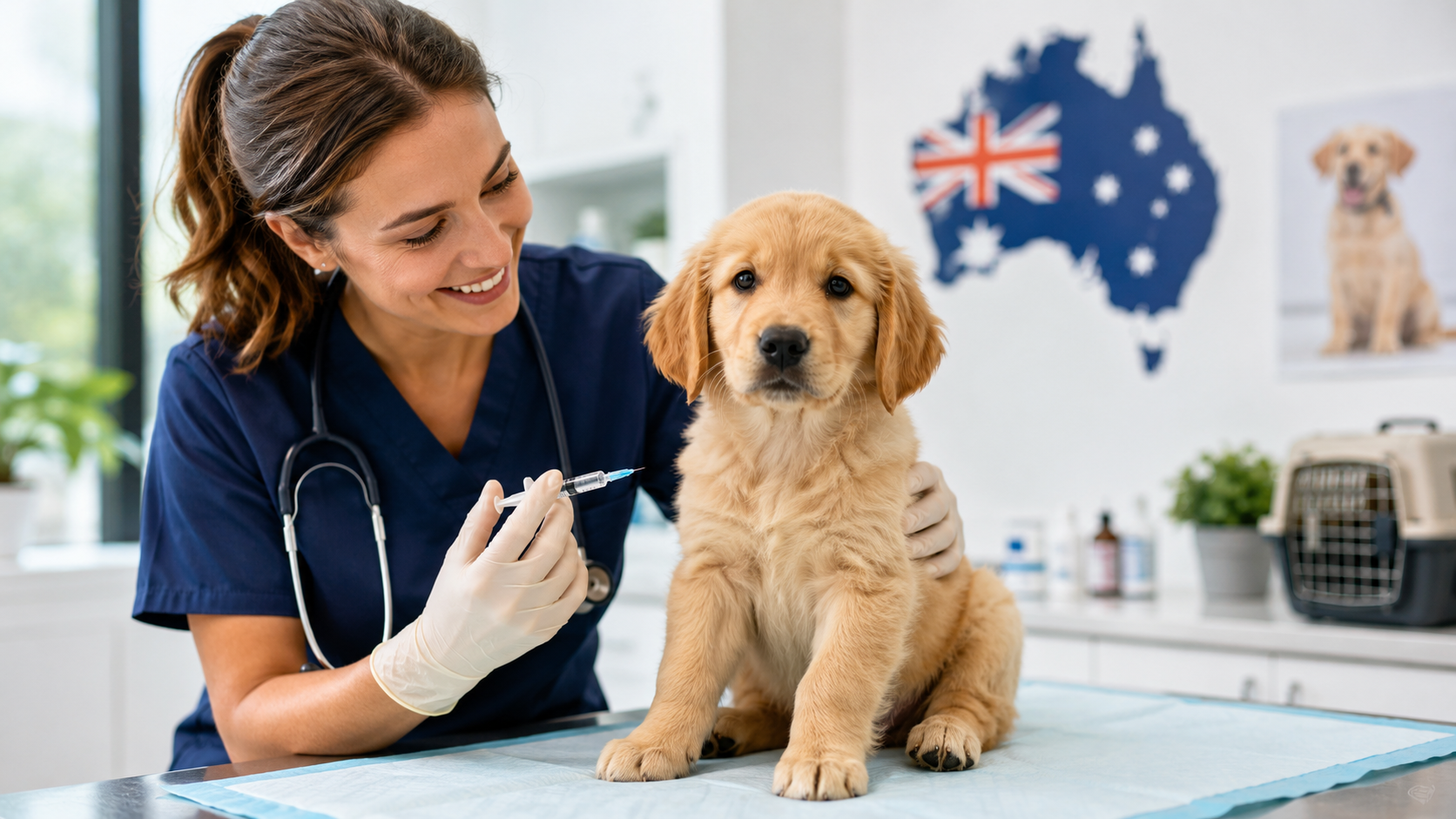
Puppy Vaccinations in Australia: What New Dog Owners Need to Know
In Australia, puppies typically receive a course of two to three vaccinations starting at six to eight weeks of age, covering core diseases like parvovirus, distemper, and hepatitis. The full primary course is usually complete by 16 weeks, followed by a booster at 12 months and regular adult boosters thereafter.
Table of Contents
- Why Puppy Vaccinations Matter in Australia
- The Australian Puppy Vaccination Schedule
- Core Puppy Vaccines in Australia
- Non-Core Vaccines: Are They Right for Your Puppy?
- How Much Do Puppy Vaccinations Cost in Australia?
- What to Expect at Your Puppy's Vaccination Appointments
- Socialisation and the 'Vaccination Window' — Balancing Safety and Development
- Protecting Your Puppy's Health Long-Term: Insurance and Ongoing Care
Why Puppy Vaccinations Matter in Australia
Puppy vaccinations in Australia are a cornerstone of responsible dog ownership. Vaccines protect your puppy from a range of serious, potentially life-threatening infectious diseases — some of which remain prevalent in the Australian environment to this day. Starting your pup's vaccination journey early gives their immune system the tools it needs to fight off illness before they encounter the wider world.
Australia has a well-established vaccination framework guided by the Australian Veterinary Association (AVA), which categorises vaccines as either core or non-core depending on the risk level and disease prevalence. Understanding this framework helps you have informed conversations with your vet and make the best decisions for your dog's individual lifestyle and environment.
This article is general information only and is not a substitute for veterinary advice. Always speak with a registered veterinarian about the right vaccination plan for your puppy.
The Australian Puppy Vaccination Schedule
The standard puppy vaccination schedule in Australia typically begins at six to eight weeks of age, with follow-up vaccinations given at ten to twelve weeks and again at sixteen weeks. This series of injections is necessary because maternal antibodies — passed from the mother to her pups — can interfere with the vaccine's effectiveness early in life. Spacing the doses ensures that by the time maternal immunity wanes, your puppy's own immune system has been properly primed.
After the initial puppy series is complete, a booster vaccination is generally recommended at around twelve months of age. From there, adult dogs in Australia typically receive boosters every one to three years depending on the specific vaccine and your vet's assessment of your dog's risk factors. Your vet will help you determine the most appropriate ongoing schedule.
Core Puppy Vaccines in Australia
Core vaccines are recommended for all puppies regardless of lifestyle, because the diseases they protect against are either widespread, highly contagious, or severe in their impact. In Australia, core vaccines cover canine parvovirus, canine distemper virus, and canine adenovirus (hepatitis). These three are often delivered together in a combination vaccine commonly referred to as a C3.
Non-Core Vaccines: Are They Right for Your Puppy?
Non-core vaccines are recommended based on your puppy's individual risk profile, which takes into account factors like your location, lifestyle, and whether your dog will be socialising with other dogs. Common non-core vaccines in Australia include those for Bordetella bronchiseptica and parainfluenza virus — the primary causes of kennel cough — as well as leptospirosis in some regions. A C5 vaccination combines the core C3 with kennel cough protection and is often required for dogs that will be boarding, attending doggy daycare, or visiting dog parks regularly.
How Much Do Puppy Vaccinations Cost in Australia?
Vaccination costs can vary depending on your location, the type of clinic, and which vaccines your puppy needs. As a general guide, each vaccination appointment for a puppy typically costs somewhere between $80 and $170 AUD, meaning the full primary course of two to three visits can add up to roughly $200 to $450 AUD in total. Clinics in major metropolitan areas such as Sydney, Melbourne, and Brisbane may sit at the higher end of that range, while regional and rural practices can sometimes be more affordable.
It's worth noting that puppy vaccination appointments usually include a general health check, which adds value beyond the injection itself. Your vet will examine your puppy's overall health, check for any early concerns, and give you the chance to ask questions about diet, parasite prevention, desexing, and behaviour. You can upload a vet bill to VetCompare to better understand what you've been charged and how it compares to typical costs in your area.
Some vet clinics offer puppy health packages that bundle multiple visits, vaccinations, and sometimes a microchip or parasite treatments into a single fee. These can offer good value for new puppy owners — it's worth asking your clinic whether they have a package available when you book your first appointment.
What to Expect at Your Puppy's Vaccination Appointments
For many puppies, their first vet visit is also their first real adventure outside the home. Try to make it as positive as possible — bring along some favourite treats, stay calm yourself, and allow your puppy time to sniff around the waiting room if it's safe to do so. Most puppies tolerate vaccinations very well, and the appointment itself is usually brief.
After the injection, it's normal for puppies to be a little quiet or sleepy for the rest of the day. Some may have mild tenderness at the injection site or a slight reduction in appetite. These reactions are generally short-lived. However, if your puppy shows signs of more significant distress — such as facial swelling, vomiting, or difficulty breathing — contact your vet promptly, as these can indicate a rare allergic reaction.
Your vet will provide you with a vaccination certificate after each visit. Keep this document in a safe place, as you'll need it for boarding kennels, dog training classes, and some council requirements. Find a vet near you if you're yet to register your puppy with a local clinic.
Socialisation and the 'Vaccination Window' — Balancing Safety and Development
One question that comes up frequently among new puppy owners is when it's safe to take their pup out into the world. Because the vaccination course isn't complete until around 16 weeks, there is a period where puppies are still vulnerable to infectious disease — yet this same period (roughly 3 to 14 weeks of age) is the most critical window for socialisation. Missing out on positive social experiences during this time can contribute to fear and anxiety later in life.
The AVA and most Australian veterinary behaviourists recommend a balanced approach: allow your puppy to socialise in lower-risk environments before their vaccination course is complete, such as the homes of vaccinated dogs, puppy preschool classes run by reputable organisations, and carrying your pup in areas where unvaccinated dogs are unlikely to have been. Speak with your vet about the specific risks in your local area and get personalised guidance on how to navigate this period safely.
Protecting Your Puppy's Health Long-Term: Insurance and Ongoing Care
Vaccinations are just one piece of the puzzle when it comes to keeping your dog healthy throughout their life. Alongside regular vet check-ups, parasite prevention, a balanced diet, and exercise, staying up to date with boosters is an ongoing commitment. Most Australian vets send reminder notices when your dog is due, but it's a good habit to keep your own records as well.
Vet costs can add up quickly, especially in the early months of puppyhood. Many Australian dog owners choose to take out pet insurance to help manage unexpected expenses. While insurance generally doesn't cover the cost of routine vaccinations, it can provide valuable financial protection for accidents, illnesses, and surgeries that may arise as your puppy grows. It's worth exploring your options early, as most policies don't cover pre-existing conditions — meaning the sooner you start a policy, the broader your cover is likely to be.
For more guidance on keeping your dog healthy at every life stage, visit our pet care advice hub, where you'll find articles on nutrition, behaviour, parasite control, and more.
Frequently Asked Questions
When should I get my puppy vaccinated in Australia?
In Australia, puppies typically start their vaccination course at six to eight weeks of age. Follow-up doses are given at around ten to twelve weeks and again at sixteen weeks. Your vet will recommend the exact timing based on your puppy's age and health status when you first bring them in.
How much do puppy vaccinations cost in Australia?
Each puppy vaccination appointment in Australia typically costs between $80 and $170 AUD, including the health check. The full primary course of two to three visits generally comes to around $200 to $450 AUD in total. Costs can vary depending on your location, clinic type, and which vaccines are required.
What vaccines do puppies need in Australia?
All Australian puppies should receive core vaccines covering canine parvovirus, distemper, and hepatitis (adenovirus) — often called a C3. Depending on your dog's lifestyle, your vet may also recommend a C5, which adds protection against kennel cough. Non-core vaccines like leptospirosis may be advised in certain regions.
Can my puppy go outside before vaccinations are complete?
There is some risk involved, as puppies are vulnerable to infectious diseases until their vaccination course is complete at around 16 weeks. However, early socialisation is also very important. Vets generally recommend allowing puppies to socialise in low-risk environments — such as homes of vaccinated dogs or reputable puppy preschool classes — while avoiding high-risk public areas. Speak with your vet for guidance specific to your local area.
How often do dogs need booster vaccinations in Australia?
After the initial puppy series, a booster is typically given at 12 months of age. Adult dogs in Australia generally receive boosters every one to three years, depending on the vaccine type and individual risk assessment. Your vet will advise on the most appropriate schedule for your dog.
Is a C3 or C5 vaccination better for my puppy?
Both are appropriate depending on your puppy's lifestyle. A C3 covers the three core diseases and is suitable for dogs with limited contact with other dogs. A C5 adds protection against the most common causes of kennel cough and is often recommended — or required — for dogs that will be boarded, attend doggy daycare, or regularly interact with other dogs. Your vet can help you decide which is right for your pup.
Are puppy vaccinations covered by pet insurance in Australia?
Most pet insurance policies in Australia do not cover the cost of routine or preventive vaccinations, as these are considered standard preventive care. However, insurance can provide valuable cover for unexpected illnesses, injuries, and surgeries. It's worth reviewing policy details carefully and starting a policy early in your puppy's life.
What side effects can puppies have after vaccination?
Most puppies experience only mild and short-lived effects after vaccination, such as tiredness, reduced appetite, or slight soreness at the injection site. Serious allergic reactions are rare but can include facial swelling, vomiting, or breathing difficulty. If you notice any of these more severe signs, contact your vet promptly.
General Health Guidance — Not a Diagnosis
The health and care guidance in this article is general in nature and does not account for your dog's individual needs. Every dog is different — a prevention product, diet or care approach that suits one pet may not be appropriate for another. Always consult a registered veterinarian before changing your dog's health routine or starting any treatment. This article is not a substitute for a professional veterinary examination or personalised advice. Price ranges in this article are indicative only, based on general market data across Australia. What you pay for your dog's care will depend on your location, the clinic you choose, your dog's size, breed and health status, the complexity of the procedure, and whether diagnostics, medications or after-hours care are required. Always request a personalised quote directly from your vet before proceeding with any treatment. This article is not a formal cost estimate for your specific pet and is not financial advice.