
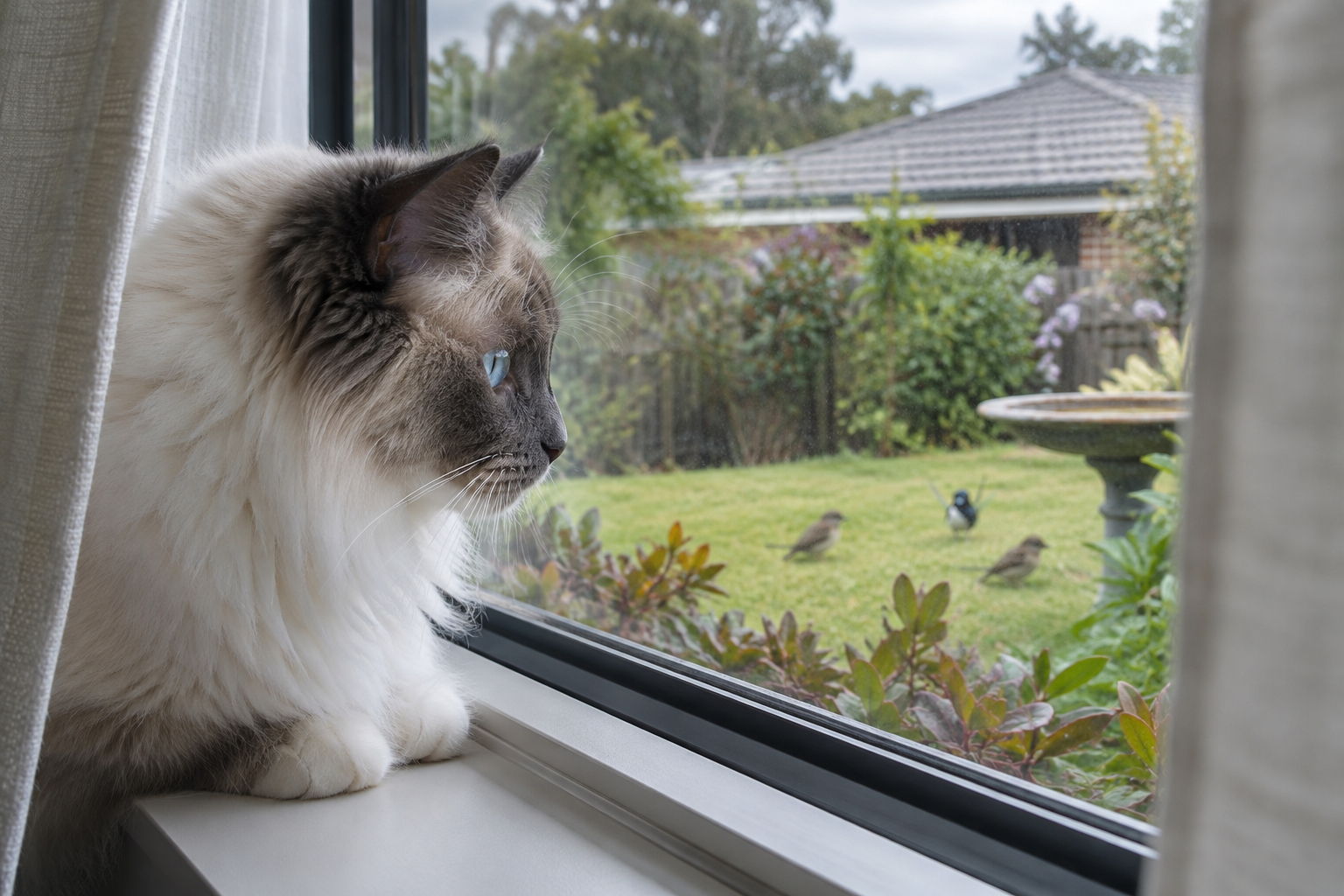
The Rise of Indoor Cats in Australia: Safety and Lifestyle
Indoor cats in Australia are cats kept inside the home permanently or during restricted hours, often in response to local council curfews, wildlife protection laws, or owner preference. With the right enrichment, indoor living can support a long, healthy life for domestic cats.
Table of Contents
- Why More Australians Are Keeping Cats Indoors
- Council Cat Curfew Rules Across Australia
- The Health Benefits of Keeping Cats Indoors
- Creating an Enriched Indoor Environment for Your Cat
- Social Enrichment and Routine
- Indoor Cat Health Costs and Veterinary Care
- Lifestyle Trends Shaping Cat Ownership in Australia
Why More Australians Are Keeping Cats Indoors
The trend toward indoor cats in Australia has grown steadily over the past decade, and today it reflects a confluence of regulation, community values, and changing attitudes about pet ownership. Where keeping a cat indoors was once considered unusual or even unkind, it is now widely recognised as a responsible and caring choice. Australian households are increasingly treating cats as full family members, and that shift in perspective has made indoor living a natural fit for many owners.
Wildlife protection is one of the most significant drivers of this change. Australia is home to an extraordinary range of native birds, reptiles, and small mammals, many of which are threatened or endangered. Research suggests that domestic and feral cats collectively kill hundreds of millions of native animals each year in Australia, making cat containment a conservation issue as well as a neighbourhood one. This has pushed both government bodies and advocacy organisations to actively encourage — and in some cases require — that pet cats be kept indoors or in enclosed spaces.
Council Cat Curfew Rules Across Australia
Local councils across Australia have moved progressively toward cat containment policies, though the rules vary considerably depending on where you live. Some councils require cats to be kept indoors or in a cat-proof enclosure at all times, while others enforce overnight curfews — typically from dusk to dawn. In the Australian Capital Territory, for example, cat containment laws apply to all residential properties in many suburbs, and similar regulations are expanding in parts of South Australia, Western Australia, and Victoria.
If you are unsure what applies in your area, checking directly with your local council is the most reliable approach. Fines for allowing cats to roam in breach of local bylaws can range from modest on-the-spot penalties to more substantial infringement notices, depending on the jurisdiction. Beyond compliance, understanding your council's requirements can also help you plan the right containment setup for your home — whether that means keeping your cat fully indoors, installing a cat run, or securing your garden with specialised fencing.
It is worth noting that registration requirements for cats also differ by council. Many local governments now require cats to be microchipped, desexed, and registered before a certain age. These requirements often go hand in hand with containment policies, so when you register your cat, it is a good time to review the local rules around roaming.
The Health Benefits of Keeping Cats Indoors
Indoor cats tend to live longer on average than cats with outdoor access, according to veterinary consensus in Australia and internationally. The reasons are numerous: they face significantly lower risks of trauma from road accidents, dog attacks, and falls; they have reduced exposure to infectious diseases such as feline immunodeficiency virus (FIV) and feline leukaemia virus (FeLV), which spread through contact with other cats; and they are far less likely to pick up parasites such as fleas, ticks, and intestinal worms from soil or wildlife.
That said, indoor living does introduce its own health considerations. Without the natural stimulation of an outdoor environment, some cats may become sedentary, overweight, or prone to stress-related conditions. Urinary tract issues, dental disease, and obesity are among the health concerns that Australian vets see more commonly in indoor cats. Regular veterinary check-ups are important for catching these issues early. If you are managing ongoing vet costs for your cat, you can upload a vet bill to get a better sense of how your expenses compare.
Creating an Enriched Indoor Environment for Your Cat
A stimulating indoor environment is essential for a cat's physical and mental wellbeing. Cats are natural hunters, climbers, and explorers, and an indoor space that caters to these instincts will support a happier, healthier animal. The good news is that enrichment does not need to be elaborate or expensive to be effective.
Vertical space is one of the most valuable things you can provide. Cat trees, wall-mounted shelves, and perches near windows give cats the opportunity to climb, survey their territory, and watch the world outside. Puzzle feeders and food-dispensing toys tap into a cat's hunting instincts and slow down eating, which can help with weight management. Rotating toys, paper bags, and even cardboard boxes can provide novelty and mental engagement throughout the day.
For cats that need more space or outdoor stimulation, a cat containment enclosure — sometimes called a catio — can offer the best of both worlds. These purpose-built structures attach to a window or door and allow cats to experience fresh air, sunlight, and natural sounds without the risks of free roaming. Prices for catios vary widely depending on size and construction, from DIY options costing a few hundred dollars to professionally installed enclosures that may run into several thousand dollars.
Social Enrichment and Routine
Cats are often described as solitary animals, but many thrive with companionship — whether from humans, another cat, or even a confident dog. If your cat is alone for long periods during the day, consider whether a feline companion might be appropriate. Introducing a second cat requires care and patience, but for some indoor cats it can make a significant difference to their daily contentment. Consistent daily routines for feeding, play, and attention also help indoor cats feel secure and reduce anxiety.
Indoor Cat Health Costs and Veterinary Care
While indoor cats may avoid some of the acute injuries and illnesses associated with outdoor life, routine veterinary care remains essential. Annual wellness checks, vaccinations, parasite prevention, and dental care are all ongoing costs that indoor cat owners should budget for. A standard annual vet visit for a cat in Australia typically costs somewhere in the range of $80–$180 AUD, though additional tests, treatments, or specialist referrals will add to that figure.
Dental disease is one of the most common and often underestimated health issues in indoor cats, and professional dental cleaning under anaesthesia can cost anywhere from $400–$900 AUD or more depending on the complexity. Weight-related conditions such as diabetes or joint problems may also require ongoing management. This article is general information only and is not a substitute for veterinary advice. If you have concerns about your indoor cat's health, find a vet near you who can assess your individual cat and recommend appropriate care.
Some pet insurance policies cover part of these costs, subject to the policy's terms, waiting periods and exclusions. Beyond that, speaking with your vet about preventive care plans or wellness packages offered by their clinic can be a practical way to manage routine costs across the year.
Lifestyle Trends Shaping Cat Ownership in Australia
Australian cat ownership has evolved considerably in recent years. Industry data suggests the number of households with cats has grown, and with it, spending on cat food, enrichment products, veterinary care, and home modifications. The rise of apartment living in Australian cities has also played a role — cats are well-suited to smaller homes compared to many dog breeds, making them a popular choice for urban residents.
Social media and online communities have also shifted perceptions of indoor cat care. Cat owners share enclosure designs, enrichment ideas, and health tips across platforms, normalising the idea that a well-cared-for indoor cat can live a full and stimulating life. This cultural exchange has helped reduce the outdated assumption that cats must roam freely to be happy. For more guidance on caring for your cat at every life stage, explore our pet care advice articles.
Frequently Asked Questions
Is it legal to let your cat roam freely in Australia?
It depends on where you live. Many local councils across Australia now have cat containment or curfew bylaws that restrict or prohibit cats from roaming, particularly overnight. Some areas require cats to be contained at all times. Check with your local council to understand the rules that apply to your address.
Can indoor cats be happy without going outside?
Yes, many cats live happy, healthy lives entirely indoors when their environment provides sufficient stimulation. Vertical space, interactive toys, puzzle feeders, window perches, and regular play sessions with their owner all contribute to a cat's mental and physical wellbeing indoors. Some cats also benefit from access to a secure cat enclosure or catio.
Do indoor cats need fewer vet visits than outdoor cats?
Indoor cats tend to have lower rates of trauma, infectious disease, and parasite exposure compared to outdoor cats, but they still require regular veterinary care. Annual check-ups, vaccinations, dental care, and weight monitoring remain important. Indoor cats can be prone to obesity, dental disease, and stress-related conditions, so routine vet visits are still recommended.
What vaccinations do indoor cats need in Australia?
Australian vets generally recommend that indoor cats receive core vaccinations, which typically cover feline herpesvirus, calicivirus, and panleukopenia (commonly called the F3 vaccine). Even cats that never go outside can be exposed to viruses brought in on clothing or through brief contact with other animals. Your vet can advise on the appropriate vaccination schedule for your cat's lifestyle.
How do I stop my indoor cat from getting bored?
Rotate toys regularly to maintain novelty, offer puzzle feeders or food-dispensing toys, provide climbing structures and window perches, and schedule daily interactive play sessions. For cats that need more stimulation, a cat enclosure attached to your home can allow safe access to fresh air and outdoor sights and sounds without free roaming.
What is a catio and how much does one cost in Australia?
A catio is an outdoor enclosure — sometimes called a cat run — that allows cats to experience outdoor conditions safely. They can be attached to a window, door, or external wall. Costs in Australia vary considerably: DIY flat-pack options may start from a few hundred dollars, while custom-built or professionally installed catios can range from $1,500 to $5,000 AUD or more depending on size and materials.
Do indoor cats still need flea and worm treatment?
Yes. While indoor cats face lower parasite risk than cats with outdoor access, they are not completely protected. Fleas can enter homes on clothing, shoes, or other pets. Some intestinal parasites can also be introduced indirectly. Your vet can recommend an appropriate parasite prevention schedule based on your cat's lifestyle and local risk factors.
How do council cat curfews work in Australia?
Council cat curfews require cats to be kept indoors or in a secure enclosure during specified hours — commonly from dusk to dawn — or in some areas, at all times. Rules differ between councils and states. Penalties for breaches vary by jurisdiction. Checking your local council's website or calling their customer service line is the best way to find out what applies in your area.
General Care Guidance
The care information in this article is a helpful starting point, not a complete or personalised care plan for cats. Individual cats have different health and environmental needs based on species, breed, age and history. Consult a vet experienced in caring for cats for guidance tailored to your specific animal. If your cat is unwell, do not rely on general care articles — seek professional veterinary assessment without delay.