
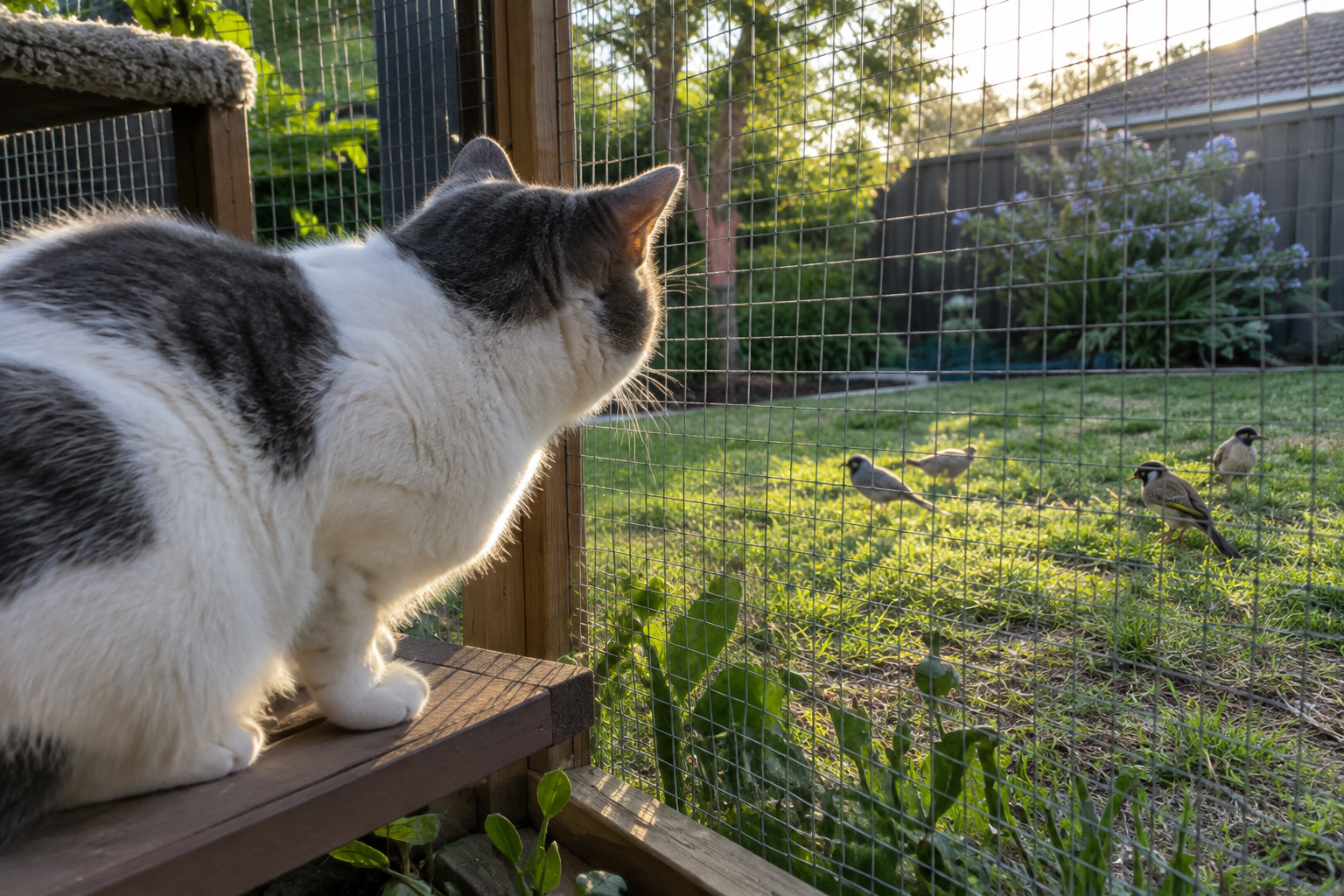
Indoor vs Outdoor Cats in Australia: Health and Safety
In Australia, indoor cats generally live longer, safer lives due to reduced exposure to traffic, predators, toxins and disease. Outdoor cats face significant risks including snake bites, cat flu and wildlife entanglement. Many Australian councils now recommend or require cat containment, making a secure indoor or enclosed outdoor setup the preferred approach for most owners.
Table of Contents
- The Indoor vs Outdoor Debate in an Australian Context
- Health and Life Expectancy: What the Evidence Suggests
- Infectious Disease Risks for Outdoor Cats
- Cat Containment Laws and Council Regulations Across Australia
- Wildlife Impacts: Australia's Native Species at Stake
- Keeping Indoor Cats Happy and Mentally Stimulated
- Cat Enclosures and Catios: The Middle Ground
- Transitioning an Outdoor Cat to Indoor Life
- Veterinary Costs: Indoor vs Outdoor Cats Compared
The Indoor vs Outdoor Debate in an Australian Context
The question of indoor vs outdoor cats in Australia carries a weight that goes beyond lifestyle preference. Australia's unique environment — venomous snakes, feral animals, fast roads and an extraordinary array of native wildlife — creates a risk profile for outdoor cats that is quite different from that in many other countries. At the same time, Australian cat owners genuinely care about their pets' quality of life, and the idea of a cat confined indoors without adequate stimulation raises understandable welfare concerns.
Australian veterinary and animal welfare organisations have increasingly shifted toward recommending cat containment, either fully indoors or within a secure outdoor enclosure. This reflects both the dangers cats face outside and the environmental damage roaming cats can cause. Understanding both sides of the debate helps you make the best decision for your individual cat and your circumstances.
Health and Life Expectancy: What the Evidence Suggests
Indoor cats in Australia typically live significantly longer than their outdoor counterparts. Estimates from Australian veterinary professionals commonly cite indoor cats living into their mid-to-late teens, while outdoor or roaming cats may have considerably shorter lifespans on average. The reasons are not surprising: outdoor cats face a constant gauntlet of hazards that indoor cats simply do not encounter.
Common health risks for outdoor cats include road trauma, attack by dogs or other cats, envenomation by snakes or cane toads (particularly in Queensland and northern regions), and exposure to infectious diseases such as feline immunodeficiency virus (FIV) and cat flu. Bite wounds from other cats — a leading cause of costly veterinary visits — are almost exclusive to cats that roam. For perspective, treating a snake bite or serious road trauma can cost anywhere from $1,500 to over $5,000 AUD depending on severity and your location. If you're ever uncertain about an unexpected bill, you can upload a vet bill to better understand what you've been charged.
Infectious Disease Risks for Outdoor Cats
FIV, sometimes called feline AIDS, is transmitted almost exclusively through deep bite wounds — the kind that occur during territorial fights between roaming male cats. There is no cure, though affected cats can be managed to maintain a reasonable quality of life with veterinary support. Feline leukaemia virus (FeLV) is another concern, spread through close contact between cats. Keeping your cat indoors or contained dramatically reduces exposure to both. A vet can advise on appropriate vaccination schedules and testing based on your cat's lifestyle and risk profile.
Cat Containment Laws and Council Regulations Across Australia
Cat containment legislation varies significantly by state and council across Australia, and it is becoming progressively stricter. The ACT has some of the most comprehensive rules, requiring all cats to be contained to their property at all times. Many local councils in New South Wales, Victoria, Queensland and South Australia have introduced mandatory cat curfews — typically requiring cats to be kept indoors overnight — or have designated cat containment zones where roaming is prohibited entirely.
Before deciding on your cat management approach, it is worth checking your local council's current requirements, as penalties for non-compliance can apply. Beyond legality, understanding these rules often helps owners appreciate just how seriously Australian authorities view the issue of roaming cats, both for animal welfare and environmental reasons.
Wildlife Impacts: Australia's Native Species at Stake
Australia is home to some of the world's most vulnerable native fauna, and roaming cats — both domestic and feral — are recognised as one of the most significant threats to native wildlife. Research consistently shows that even well-fed domestic cats retain strong hunting instincts and can kill native birds, lizards, small mammals and frogs. This occurs regardless of whether the cat appears to bring prey home.
Species such as small skinks, wrens, thornbills and even juvenile possums are particularly at risk from suburban cats. For many Australian cat owners, learning about this impact is a genuine motivator to transition to indoor or contained living arrangements. The good news is that a well-designed cat enclosure — sometimes called a 'catio' — allows cats to experience fresh air and outdoor stimulation without the ability to hunt wildlife.
Keeping Indoor Cats Happy and Mentally Stimulated
One of the most common concerns raised about indoor-only cats is boredom and the behavioural problems that can follow, including destructive scratching, overgrooming or aggression. These concerns are legitimate but entirely manageable with the right environment. Indoor cats benefit enormously from vertical space — cat trees, wall-mounted shelves and window perches allow them to survey their territory and engage their natural climbing instincts.
Interactive play is essential. Puzzle feeders, rotating toy selection, and dedicated daily play sessions that mimic hunting behaviour help keep indoor cats mentally sharp and physically active. Many owners also find that adopting cats in bonded pairs provides constant companionship and enrichment. If you notice persistent behavioural changes in your indoor cat, a vet visit is worthwhile — sometimes what looks like boredom can have an underlying health component. Speak with your vet about an enrichment plan suited to your cat's age, breed and temperament. You can also explore further pet care advice for cats at various life stages.
Cat Enclosures and Catios: The Middle Ground
A purpose-built cat enclosure attached to the home — commonly called a catio — offers an excellent compromise between full outdoor access and strict indoor living. These enclosures range from simple window box designs through to large walk-in structures with tunnels, perches and sheltered areas. Installation costs vary widely depending on size and complexity, with basic DIY kits starting around $200–$500 AUD and professionally installed custom structures potentially reaching $2,000–$5,000 AUD or more. Many councils actively support cat enclosures as a preferred solution, and some offer subsidies or guidance through their animal management programs.
Transitioning an Outdoor Cat to Indoor Life
If you've decided to transition an existing outdoor cat to a contained lifestyle, patience is key. Cats that have spent years roaming freely can find sudden confinement stressful. A gradual approach — starting with shorter periods indoors, increasing enrichment simultaneously, and providing access to a secure enclosure — tends to work better than an abrupt change.
Some cats adapt quickly and appear unbothered; others may vocalise, pace or attempt to escape for several weeks. Feliway-style pheromone diffusers, which release synthetic calming signals, are sometimes recommended during this transition period — though a vet can advise on whether these are appropriate for your individual cat. Most cats do settle into an enriched indoor lifestyle given time, consistency and plenty of positive interaction from their owners. This article is general information only and is not a substitute for veterinary advice.
Veterinary Costs: Indoor vs Outdoor Cats Compared
From a purely financial perspective, indoor cats tend to generate lower emergency veterinary costs over their lifetimes. The expensive, unpredictable bills associated with trauma, envenomation, fight wounds and infectious disease are far more common in outdoor cats. That said, all cats — indoor or outdoor — require routine care including annual health checks, dental assessment, parasite prevention and vaccinations, which can run anywhere from $150 to $350 AUD per year depending on the clinic and your cat's specific needs.
Indoor cats are not immune from health problems — obesity, dental disease and urinary issues are common in less active indoor cats and can generate significant vet bills if left unmanaged. Keeping your cat at a healthy weight and scheduling regular vet visits goes a long way toward preventing these conditions. Some pet insurance policies cover part of veterinary costs, subject to the policy's terms, waiting periods and exclusions. To find a vet near you who can help with a preventive care plan, use the VetCompare clinic search tool.
Frequently Asked Questions
Is it cruel to keep a cat indoors in Australia?
No — provided their environment is adequately enriched. Indoor cats in Australia can live long, contented lives when given sufficient mental stimulation, play, climbing opportunities and human interaction. Many Australian vets and animal welfare organisations consider a safe, stimulating indoor environment to be in a cat's best interest, particularly given the significant outdoor risks present in Australia.
How long do outdoor cats live compared to indoor cats in Australia?
Indoor cats in Australia typically live into their mid-to-late teens on average, while outdoor or roaming cats often have considerably shorter lifespans due to risks including road trauma, disease and injury from other animals. The gap can be substantial, though individual circumstances vary widely.
Are cats required to be kept indoors by law in Australia?
It depends on where you live. The ACT requires cats to be contained to their property at all times. Many other councils across Australia have introduced curfews, containment zones or specific rules about roaming cats. It's important to check your local council's current regulations, as these rules are becoming more common and enforcement is increasing.
What are the biggest dangers for outdoor cats in Australia?
Outdoor cats in Australia face a range of serious risks including road trauma, dog attacks, bite wounds from other cats (which can transmit FIV), snake and cane toad envenomation, and infectious diseases such as cat flu and feline leukaemia virus. Australia's native wildlife also poses some risk, as certain snakes and even swooping birds can injure cats.
How do I keep an indoor cat entertained and mentally healthy?
Key strategies include providing vertical space such as cat trees and shelves, rotating toys regularly, using puzzle feeders, scheduling daily interactive play sessions, and considering a bonded companion cat. Access to a secure cat enclosure or catio adds outdoor stimulation safely. A vet can advise on an enrichment plan suited to your cat's age and personality.
What is a catio and how much does one cost in Australia?
A catio is an enclosed outdoor structure that allows cats to experience fresh air and outdoor stimulation without being able to roam freely or access wildlife. Costs range broadly — from around $200–$500 AUD for basic DIY kits to $2,000–$5,000 AUD or more for professionally built custom enclosures. Some councils support or even subsidise their installation.
Do indoor cats still need parasite prevention and vaccinations?
Yes. Indoor cats still require routine vaccinations and parasite prevention, as some pathogens and parasites can be introduced into the home on clothing, shoes or through brief contact with the outdoors. A vet can advise on the appropriate vaccination schedule and parasite prevention products for your cat's specific lifestyle and risk level.
How can I transition my outdoor cat to living indoors?
A gradual approach works best. Start with shorter indoor periods and increase them over time while simultaneously enriching the indoor environment. Providing a catio or enclosed outdoor access can ease the transition. Some cats adjust quickly; others may take several weeks. Speak with your vet if your cat shows signs of significant stress during the changeover.
General Health Guidance — Not a Diagnosis
The health and care guidance in this article is general in nature and does not account for your cat's individual needs. Every cat is different — a prevention product, diet or care approach that suits one pet may not be appropriate for another. Always consult a registered veterinarian before changing your cat's health routine or starting any treatment. This article is not a substitute for a professional veterinary examination or personalised advice. The care information in this article is a helpful starting point, not a complete or personalised care plan for cats. Individual cats have different health and environmental needs based on species, breed, age and history. Consult a vet experienced in caring for cats for guidance tailored to your specific animal. If your cat is unwell, do not rely on general care articles — seek professional veterinary assessment without delay.